DEKALB ECONOMIC DEVELOPMENT CORPORATION
AI clarity for futures
Commodity futures analysis is not just about numbers — it is about context, discipline, and the humility to admit what the data cannot say. We developed our approach after watching markets repeatedly surprise even the most seasoned professionals. By respecting both the limitations and the power of AI, we aim to set a new standard for research transparency.

Our research draws on historical commodity positioning records, comparing decades of speculative activity to identify recurring themes and outliers. This provides a grounded foundation for interpreting current shifts.

Using advanced machine learning, we extract subtle signals from large datasets. Our proprietary workflow emphasizes both accuracy and transparency in reporting, so nothing is hidden behind a black box.

Collaboration is central to our process. We blend perspectives from economists, data scientists, and industry veterans, ensuring our conclusions are robust and practical.
Analysis is not a product; it is a process. We share our process openly, welcoming scrutiny and dialogue.
Data alone cannot explain a market’s behavior. It’s the context, the questioning, and the shared expertise that bring meaning to the numbers.
We designed our reporting process to be transparent from start to finish. Every analytic step is documented and reviewed by peers, ensuring accountability.
What really shapes commodity futures analysis — the numbers, or the people reading them?

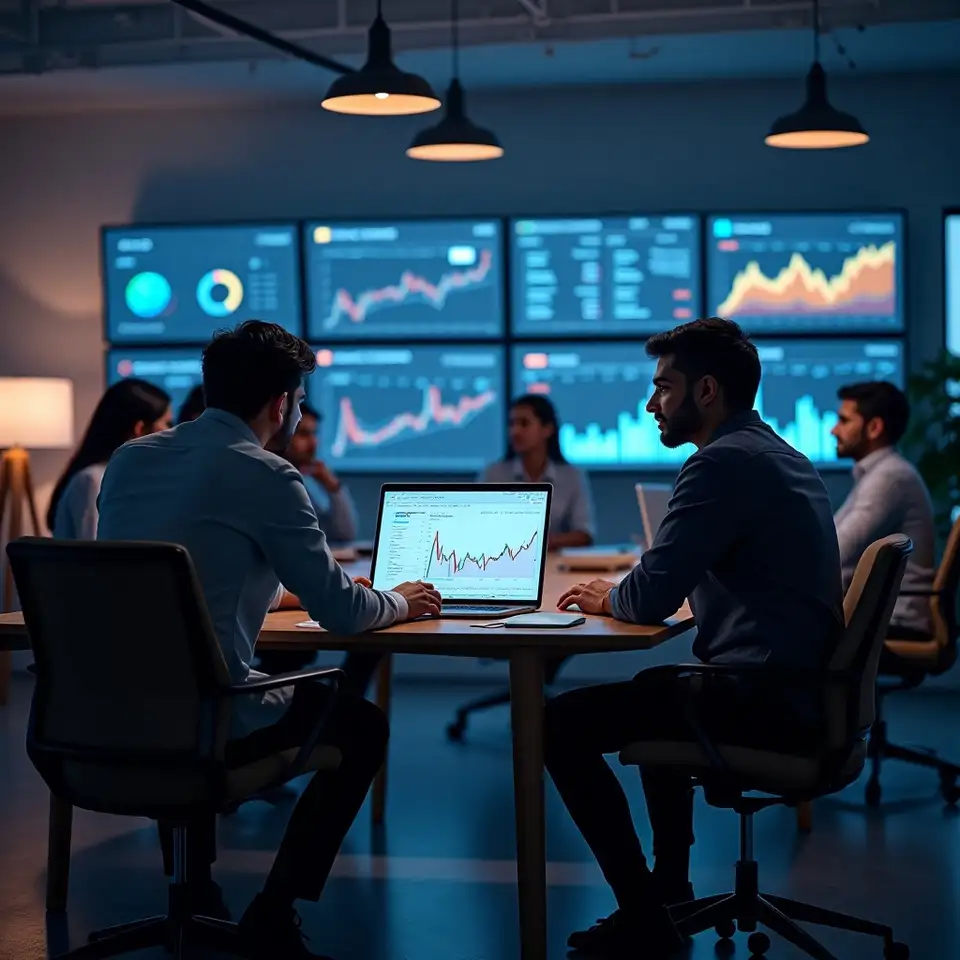
Commodity futures have always been more than a matter of numbers. The real narrative sits within the ebb and flow of open interest, speculative shifts, and the quiet build-up of positions over time. Our team brings a historian’s eye to the world of AI, asking: What did previous generations miss — and how can today’s statistical tools reveal new patterns? Each member of our research group draws on backgrounds in quantitative analysis, market operations, and econometric modeling, using a methodology we call Layered Signal Extraction. This approach allows us to compare historic cycles with present-day moves, clarifying not just what is happening, but why certain speculative behaviors emerge.
Contact usWhy trust an AI model if you don't know its limits? We believe in showing the edges, not just the center, of every dataset.
Every shift in commodity positioning tells a story — but are we listening closely enough?
Market narratives are built on both fact and interpretation. We recognize that every new dataset is filtered through the lens of earlier cycles, and we strive to make those implicit comparisons explicit in our reporting.
We avoid the temptation to oversimplify. Speculative activity is complex, and our analysis respects that nuance by showing both the signals and the noise in the data.
We believe collaboration with DEKALB ECONOMIC DEVELOPMENT CORPORATION specialists is critical. Our team regularly engages with researchers and experienced market participants to refine our algorithms and interpretations.
What do we miss when we read only the headlines about commodity futures? For decades, traders and analysts have relied on partial data and intuition. Our work examines what happens when artificial intelligence finally steps into this historical gap, offering a more systematic review of market positions and speculative activity.